Showing posts with label spoiler alert. Show all posts

Monday, September 21, 2015

"Firetale" Finale Review.


 Things begin to happen a little too quickly in the final chapters.  Greg dies, is resurrected by Martha, whose body is killed while her consciousness is in Greg's body, and then we find out she's actually a goddess, all in two short chapters.  Too, too much all at once.  Plus, it is difficult to understand why the Judge would bother killing Martha at all.  She obviously hadn't broken the pactum, and he wasn't even sure she was a demionis.  She hadn't done anything that could have warranted an execution, and yet he killed her when she was defenseless.  Sure, we'd seen enough of Judge Ciaus to know that he was a bastard who would kill indiscriminately, but this still seemed beyond him.


The end is abrupt (a pseudo cliffhanger meant to make you want to read the next book, but doesn't).  Though it sets up the whole goddess story line to be the potential focus for the next book, the fact that we knew nothing about the goddess until the very end of the first book doesn't create a strong emotional connection to that potential plot.  The Astorath story line was completely ignored in the last few chapters, and we don't know where Zaches ran off to.  The story we were following for the first book is left unfinished, and a new one is shoved in its place at the eleventh hour, and it feels wrong.  In fact, the last few chapters of "Firetale" almost feel like they were written by a different person.  The voices of the characters feel different.  The descriptions of events feel like they flow differently.  Maybe this part of the story was written at a different time than much of the opening chapters, but there is definitely a disconnect that is unpleasantly jolting in the final quarter of the book.

We're also still seeing chapters from other points in time that have no relation to the current story.  Maybe they'll come into play in the next few books, or maybe they're not meant to be anything more than mental breaks, or to stretch out the number of pages.  Whatever their intended purpose, they feel unwelcome.

This book had so much promise in the opening chapters.  I was inspired by the number of characters, by how well each voice was written.  Now I'm disappointed.  I think that Dante E. Graves just tried to do too many things in this story and it turned it into a bit of a muddled mess.  Very unfortunate.  I'm not even sure I'll bother with the second book in the series.  I just don't know if I care enough about the characters anymore, and I know that I don't want to suffer through such unnecessary back story and exposition just to finish off the Astorath story line.

Tuesday, September 1, 2015

Part 1 of "Wool," by Hugh Howey, is as sad and bleak and full of hope as the world in which it is set.


 When is the lie the truth?  Truth, a lie?  When do we start telling the intentional lies?  Do we lie to our children – scare them into believing the world is more dangerous than it really is, if only to protect them a little better?  Do we lie to our elders as they are coming close to death – tell them they are going off to a better place where there will be no more pain or suffering?  Do we cling to our lies, or to our truths?

Houston isn’t sure which is the lie and which is the truth anymore.  All he knows is that his wife believed they were being smothered by lies, and was willing to die to prove it, if only to herself.  It’s been three years since she willingly walked out of the silo that had sheltered the last of human kind for hundreds of years.  She needed to know what was really beyond the grainy, clouded, pixelated screens that offered their only view of the land around them.  She had uncovered a program that had the ability to re-write the image the cameras captured and display a modified image on screen.  She believed, wholeheartedly, that the images being shown to them on the screens was fake, that someone had decided, long ago, to keep people cloistered inside the silo, even as the world outside shed the toxins that had forced their ancestors underground so long ago.

The memory of watching his wife cleaning the cameras from the outside of the silo, doing her best to show the real world to the people still trapped inside, has haunted Houston for three years, and he can’t take it anymore.  He has to know what it was that she saw out there.  He has to know if she had been right all along.  Even though he knows it’s most likely that she was mistaken and the world is the same dead, bleak world they’ve been staring at on those monitors their entire lives, the mere chance that she could have been right – that it could all be a lie – emboldens him to take action.

Houston steps outside the airlock, in a carefully designed hazmat suite, and wonders if the suite is all part of the lie as well.  Surely the clear blue sky and green grass that he sees through the hazmat hood can’t possibly be toxic.  Surely his wife had been right all along.  He would find her, he is certain of it.  He will find everyone who has walked outside and lived.  For they all must have.  A world so bright and full of life couldn’t possibly be the deathtrap he had been raised to believe.

But, it is.

Houston discovers, in his last seconds of life, that the only lie he had ever been told, was by the visor in the helmet of his hazmat suite.  There, the program his wife had uncovered all those years ago, worked his horrible magic, turning the dead landscape that was truly his world, into a virtual Eden, to be enjoyed at the moments of death, before the toxins that destroyed the planet so long ago, ripped through the lying suite and tore him apart from the inside.

Is it more cruel to lie to someone at the moment of their death – giving them hope of a future and freedom?  Of course, lying about one’s true freedom over the course of their entire lives is certainly cruel.  If Alison had been right and the giant screens at the top of the silo were displaying a fake world in order to control those who lived inside, that would be horrendous, no doubt about it.  But it’s still not excusable to lie to those who’ve been sent outside – allowing them a few minutes of belief that they will survive out there – that those who’ve walked outside before them had survived as well.  It doesn’t matter when the lie happens – it’s still cruel.


Yes, the truth is bleak – a dead world with no hope and no future – but it’s still the truth, and people have a right to know what it is that kills them.  In the case of Alison, it was idealism and misguided hope.  In Houston’s case, it was blind love.  We can only hope that those remaining inside the silo are not so fool-hardy.

American Girl, Rebecca Rubin, solves the mystery of "The Crystal Ball"


12455938 True to the American Girl tradition, the stories of Rebecca Rubin integrate lessons about accepting diversity and female independence while offering an entertaining story.  In New York City, before America’s involvement in WWI, immigrant families lived and worked together, creating communities built on mutual trust rather than a common genealogy or first language.  This is why, when things start going missing in the brownstone where Rebecca and her family live, there is a high sense of betrayal.  The prime suspect in the thefts is Rebecca’s cousin, Josef, who’s come to live with her family for the summer.  As an aspiring carpenter, Josef has taken odd jobs in many of the apartments in the building, and appears to be the only person who had access to all the missing items.
Rebecca shows herself to be level headed, early in the story, when she’s quick to work out how a street fortune teller is likely reading body language and vocal cues to guess at her customer’s situation.  She even realizes that the vague answers the fortune teller gives out can easily mean a number of things, but the customer is quick to think it means what they want to hear.  Though Rebecca has a good head and a great deal of common sense for someone so young, she is still drawn into the hype over the stolen items, and allows herself to wonder if her cousin could be guilty.  When she notices him coming out of a pawnshop, she begins to worry that everyone’s accusations may hold merit.  Finding an excuse to scope out the pawnshop leads to further doubt when she notices items for sale that may very well be the items in question.

Not one to take appearances at face value, Rebecca keeps digging into the issue.  She is the first to posit that the buildings interim handyman, Mr. Silver, is a little suspicious – maybe too friendly, always hanging around, and able to pick locks with a hairpin.  Though Rebecca’s older sister, Sadie, doesn’t believe it could be Mr. Silver, she is willing to support Rebecca in her quest to find more information.  When the building’s janitor, Mr. Rossi – who’s laid up with a broken hand – wants to take his deceased wife’s special candlesticks to a fortune teller that Mr. Silver pointed him towards, Rebecca’s suspicions increase, and she and Sadie follow after.

Rebecca’s determination to find the truth, rather than accepting things as they seem, and her determination to see her friends taken care of, lead her to finding the thief, and she’s quick to figure out how he pulled it all off, too.  Even after she’s put in danger, she refuses to back down, and stands up to the pawnshop broker who bought all the stolen merchandise (and was refusing to sell back the family heirloom Josef’s father was forced to pawn earlier that year when the family wasn’t making ends meet).  She shows that keeping one’s head, not jumping to conclusions, and watching out for your friends is within every girls’ power.

Monday, August 31, 2015

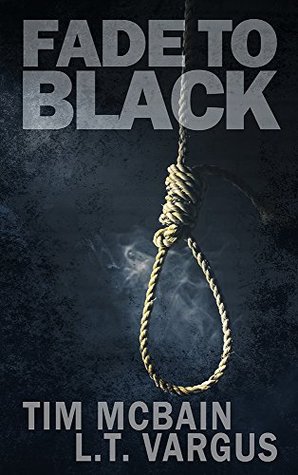
"Fade to Black" by McBain and Vargus will be fading into book obscurity in no time.

23403384

The first task of any book is to make the reader invested in the protagonist.  We have to care enough about the person to want to see how their story plays out.  We have to sympathize with them when they’re hurting, rejoice with them when their happy, and we have to want them to succeed with whatever task is placed before them.  Unfortunately, none of that happened in this introduction to Jeff Grobnagger.  (By the way, authors, “Grobnagger” is a name for a drunken frat boy who is inappropriate with the freshman girls.  It’s not a good name for a protagonist.)

I find that the main reason I couldn’t like Jeff (I will not be using that horrid last name throughout the rest of this review) is that Jeff clearly doesn’t like himself.  When you add together his nonchalant attitude towards danger and death and utter disregard for his own health and well-being, his use of juvenile and sexist metaphors and unnecessary use of curse words, his constant avoidance of human interaction and dramatic proclamations that people use interaction to avoid reality, and his outright lies about his past (except the part where he admits he would get drunk every morning in high school), you find yourself wondering if he has a clinical form of depression, or if he’s just a downright jerk.

Jeff seems to blame his backstory for his attitude towards people and life in general.  However, it takes far too long for us to find out what that backstory is, and when we do get as much as he is willing to offer, it doesn’t seem adequate to excuse his behavior.  His story is unfortunate, yes – abandonment being the key component early is his childhood.  However, without any further explanation of how he was treated by the people who did raise him, it’s impossible to know of his depression was situationally induced or a genetic predisposition that latched onto his sad story and wouldn’t let go.  Jeff certainly thinks it’s a sad enough story to excuse his behavior, though why he then thinks he needs to lie about it is beyond me.  He sees himself as a victim and wonders why people can’t tell, just by looking at him, that he’s been shattered and broken, and is still vulnerable.  He wears shades when he’s out in public, and hates what he sees in the mirror, or even his reflection in a mud puddle.  But his impression of himself doesn’t match up with how people treat him.

Of course, how people treat him is often with a great deal of reverence, as he’s supposed to be some special, talented person, able to tap into some psychic whatever (not really well explained, as half the players think it’s all hooey anyway).  Jeff randomly (or so it seems) runs into a guy named Glenn, whose daughter has gone missing after getting involved with the people who are after Jeff.  It never makes sense that Glenn would just happen to be there at the right time, or just happen to start telling Jeff, a complete stranger, all about the world that his daughter had gotten hooked into.  But Jeff doesn’t seem to find it odd – probably because he doesn’t spend much time interacting with people and is unaware that you don’t just do stuff like that.  But it doesn’t come as any surprise to the readers when Glenn turns out, in the last few pages, to be more than he was passing himself off as.  Though I do wonder why Glenn held back so much information from the very beginning, when he could have at least clued Jeff into a few things that would have helped him early on.

A lot of Tarot symbolism is utilized in the book, but no one calls it that until Glenn explains it to Jeff (just before walking into a portal of white light that he cut into a concrete wall – don’t know what that was supposed to be about).  Glenn could have mentioned it when Jeff first told him about his recurring dream, which involved him hanging upside down from one foot.  That is the classic “Hanged Man” card utilized in most Tarot decks to symbolize a change in perspective, or an ending of one’s old way of doing things and the beginning of a new path.  To ignore the inspiration for the symbolism in the book until the very end seems a little rude.  Anyone who knows anything about Tarot would have to wonder if the symbols are being ripped off, rather than receiving their proper due.


The ending of the story was a clear cliffhanger meant to encourage readers to rush out and buy the next installment, but frankly, you couldn’t pay me to read the next book in this series.  With an unlikable leading man, poor use of metaphors and vernacular, and symbolism that is tossed about like it was dropped in a food processor, the story of Jeff BadLastName should quickly fade into obscurity.

Sunday, August 16, 2015

Paulo Coelho's "The Alchemist" is a fantastical analogy of the struggle to follow one's dreams.

"Everyone, when they are young, knows what their Personal Legend is," King Melchizedek explains to Santiago.  "It is what you have always wanted to accomplish."  But achieving one's Personal Legend isn't just about finding the treasure, or becoming the best at something.  It is also about the journey, learning to trust yourself, learning to use your talents in new ways, learning when to trust others, and when not to.  This book is about Santiago's journey to achieve his Personal Legend, and it's kind of an instruction manual to the readers in how to achieve their own.


The journey Santiago makes is meant to be allegorical to the journeys we all take in striving for our dreams, but Paulo Coelho is sometimes quite literal with his story telling.  For example, while we colloquially use "dream" as a reference to an aspiration we've thought over, planned, and even day-dreamed about, Santiago has a dream in the middle of the night were he sees the great pyramids of Egypt (which he didn't know for certain of they did in fact exist), and a whispering voice telling him he will find great treasure there.  From what we know about Santiago thus far in the story, it seems like the adventure of traveling to Egypt would appeal to him, as he enjoys his time wandering from town to town with his flock of sheep, taking new paths each time and exploring the lands of his home in Andalusia, Spain. However, taking on a journey of that magnitude requires the promise of a reward greater than just getting to see a new place, especially if you're a humble shepherd, living from one trading center to the next, so the whispers of great treasure inspire him to act when he might have otherwise cast off the dream as pure fantasy.


King Melchizedek explains to Santiago that the Universe always conspires to help us achieve our Personal Legends.  However, Santiago finds that this does not happen in the way one might expect or hope for.  He rushes, fool-hearty, off to Morocco to begin his journey to the pyramids, and is instantly robbed.  He is forced to live in the coast town, working in a small crystal shop, in order to save up the money he would need to return home.  But just when he's ready to pack up, go home, and admit defeat, he hears of a caravan heading east, in the direction of the pyramids.  He thinks of all he's learned in over a year living in the coast town.  He's learned the local language, he's made contacts with the traveling merchants who go on the caravans, and he's learned that just because things go terribly wrong doesn't mean he can't find a way to make it work.  He had survived being robbed and stranded in a foreign country, and he could survive the next leg of the journey.


That is the true lesson of the book, learning to not give up.  Santiago is faced with multiple chances to give up on reaching the pyramids.  He could have stayed in an oasis town as advisor to the local magistrate, married to the woman he truly loved, Fatima.  But he knew he would not be happy if he had given up, and he knew that Fatima would not want to be the reason he gave up.  He could have turned back when he found himself caught between feuding tribes in the desert.  But he focused on why this journey was really so important to him (and it wasn't the promise of treasure) and pushed through.  He could have given up when he had actually reached the pyramids just to see that there was no treasure waiting for him to find.  But he waited and listened, and he was given a sign as to the final leg of his journey.


Patience, level-headedness, a slow tongue and a sharp mind were the true treasures Santiago gained from his journey (though there was a chest of gold in there as well).  The journey itself is the greatest treasure any of us will ever find.

Wednesday, August 12, 2015

"10 Things to Do Before I Die" by Daniel Ehrenhaft could have been more than what it was.

451944
When you are a teenager, life seems endless.  There are a million possibilities that stretch out before you.  You can do anything you want, be anything you want.  There is nothing holding you back.  Unless you are Ted Burger.  His day started out so normal: going to school, playing guitar, avoiding the girl he's not sure why he's dating, and then hanging with his two best friends at their favorite burger joint.  That's when things start going downhill, for both Ted, and the reader.


Ted is finding it hard to breathe, and we, the readers, are finding it hard to believe that no one in this young man's life stops for five seconds to help him calm down.  Everyone is just running about their lives, telling him it's going to be okay, but not pausing to show him that he's not actually dying (oops, spoiler alert).  A quick conversation with a nurse, who wants him to stick around for more tests, has him more nervous than calmed.  A phone call to the doctor father of a friend has him more confused than mollified.  And the internet (a teenager's home away from home) gives him the answer he's looking for: he will be dead in 24 hours.


His best friends latch onto this announcement from Ted like it's gospel, and a crazy night ensues, doing all the things Ted has ever wanted to do before he dies.  Granted, he does get to do some amazing things, like jamming on stage with his favorite band.  But the audience is dragged through a series of short interactions with the people in Ted's life, all of whom he seems to be trying to run away from, and the only one who is able to hold his attention, and could have possibly calmed him down and made him see what was really going on, was so caught up in the night that she hardly even questioned the story, which culminates in a stand off with the TSA as Ted is trying to hop a plane to Africa.


It's not hard to like Ted in the beginning.  He seems level headed and observant.  He's smart and kind, and he's great at the guitar.  He's the kind of guy I would have liked to be friends with in High School.  But he's kind of an idiot about his own health and how to deal with stressful situations.  His reaction to his medical problem seems disconnected with the early calm and steady Ted we are introduced to, and the fact that so many people just accepted the internet's prediction that he was about to die is either unrealistic, or a sad commentary on modern reliance on the internet.


For such a promising opening chapter, this book was sadly disappointing.  But I would be willing to give the author another chance.